Construction & Data Centers
Connectivity That Grows With Your Site, From Ground Break to Occupancy
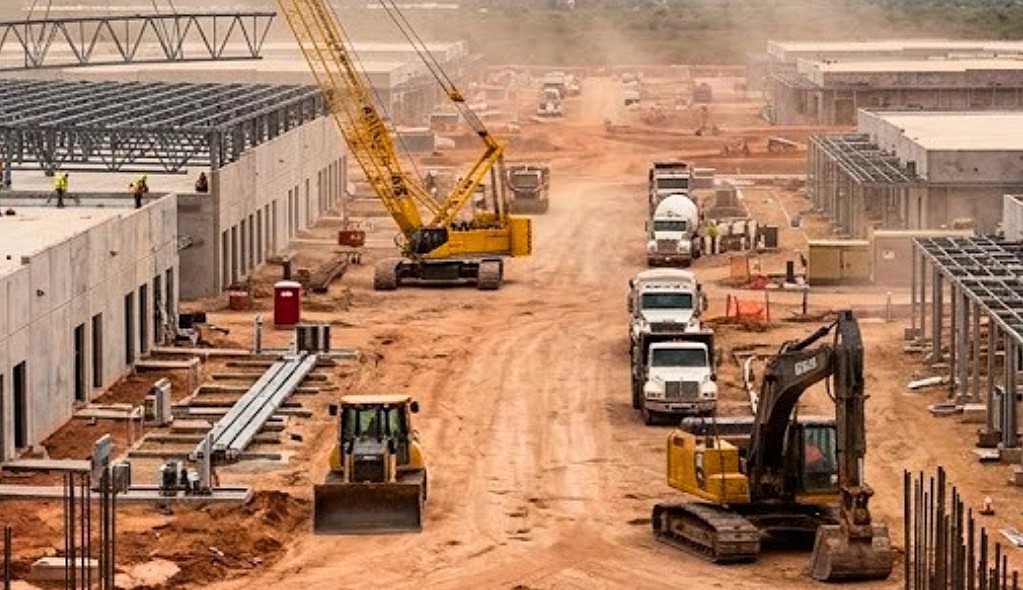
Most construction sites start with nothing: no fiber, no cabling, no fixed network to build on. GXC delivers private cellular connectivity that stands up as fast as the site does, covers open dirt and steel-frame shells alike, and evolves into permanent in-building infrastructure once the building is ready to use. For data centers, where speed of build and remote locations raise the stakes even further, GXC brings that same connectivity model to some of the most schedule-driven, mission-critical construction projects in the industry.
The Industry's Challenge
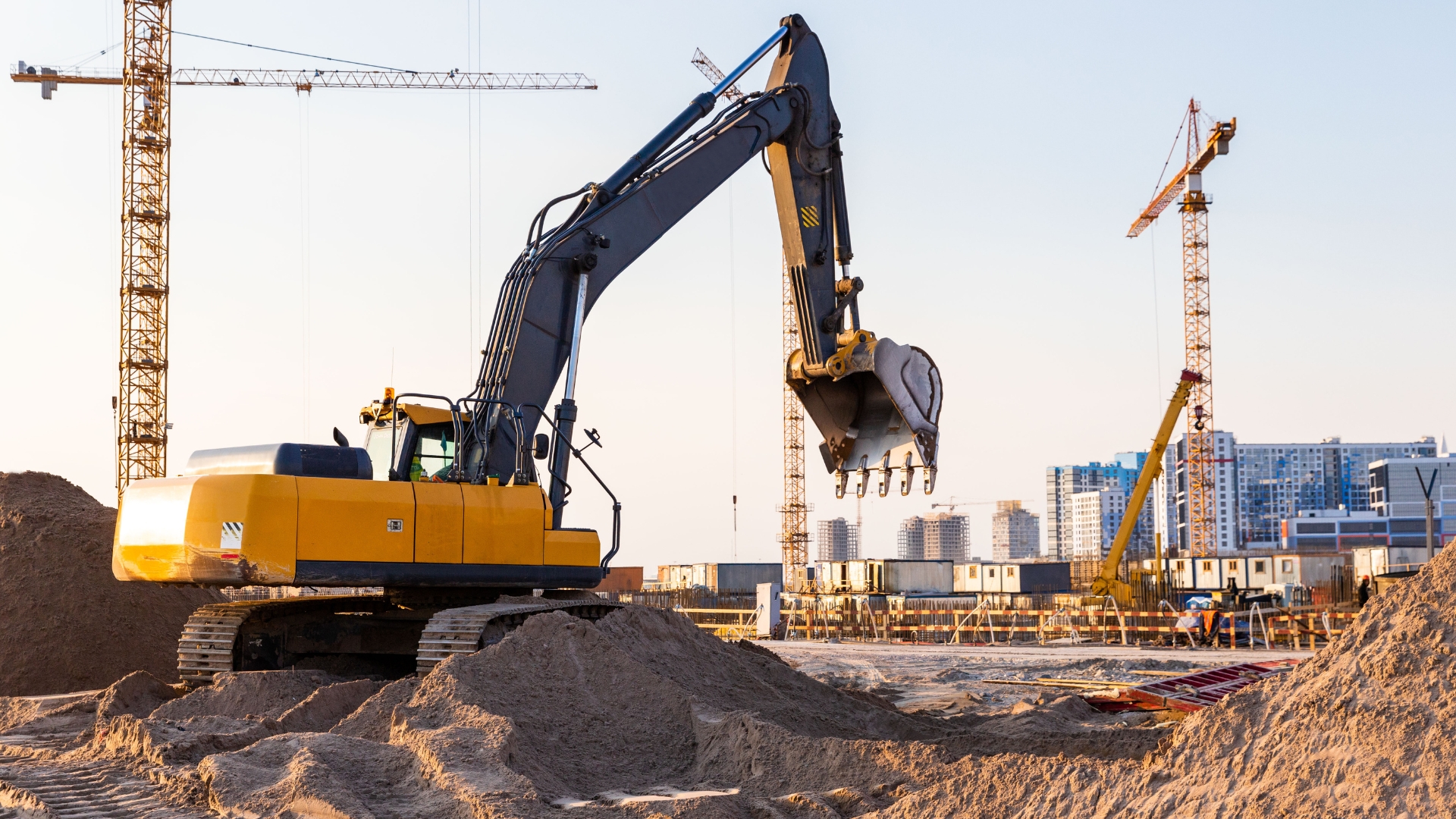
Every construction site runs into the same fundamental connectivity obstacles, made worse by the pace and physical realities of an active job site:
- No connectivity inside the shell: Once a building shell is up, steel and concrete block outside carrier signal from reaching the interior, leaving crews without connectivity exactly when trades move indoors.
- No network infrastructure to build on: Construction sites have no cabling in place to support Wi-Fi, so there’s nothing for a conventional network to run on until permanent infrastructure is installed.
- High uplink demands: Many of the cameras and equipment sensors on a job site require higher uplink than legacy networks were built for, a demand that previously couldn’t be spread reliably across thousands of devices and users.
Data Centers
- The cost of delay: every week a data center isn’t operational is a week of lost revenue and delayed return on a major capital investment, making jobsite connectivity gaps a direct cost, not just an inconvenience.
- Redundancy during the build: data centers are built around uptime, and that expectation starts during construction. A network with redundant paths and failover built in reduces the risk of a single point of failure taking down site connectivity during a critical build phase.
Security & Multi-Contractor Access
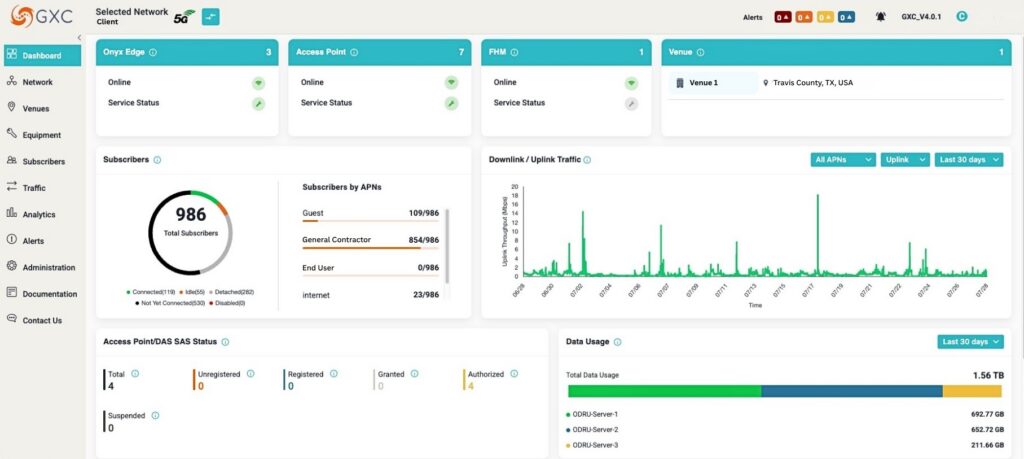
- Segmented access by contractor or trade: GC, sub, and vendor traffic can be separated on the same network, so one contractor’s devices aren’t exposed to another’s.
- Managed guest and temporary access: access can be granted and revoked as crews rotate on and off the site, without reconfiguring the whole network.
- Protected critical systems: safety and security systems stay isolated from general site traffic, reducing the risk of interference or unauthorized access.
Construction Use Cases
Once GXC is on site, it supports the day-to-day systems and workflows crews and site management already depend on to keep the project moving:

Connected Worker Communication
Push-to-talk, Microsoft Teams, and other communication tools that work indoors and outdoors, without walking outside for a signal

CAD & BIM File Access
Fast, reliable access to CAD drawings and Building Information Modeling data from anywhere on site

Mobile Devices & Tablets
Reliable connectivity for tablets and phones used by supervisors, trades, and site management
Crane & Equipment Operations
Real-time connectivity for crane operations and other remotely monitored heavy equipment

Autonomous Vehicle Operations
Connectivity to support autonomous vehicles and equipment operating on site

Security & Access Control
Security cameras and access control systems that function across the site, including areas without existing infrastructure
How GXC Compares
Other private cellular providers serving construction and data center sites tend to be built around a fixed deployment: access points and infrastructure sized for the site as it exists at the time of installation. That works reasonably well for a site that isn’t changing much, but construction sites change constantly, adding workers, structures, and phases month over month, and most competing approaches require a new project, new equipment, or a new install to keep up.
GXC is built around that constant change instead of around a fixed install. The same network that covers open dirt during site prep can densify for mid-construction and extend inside the building shell once it’s up, using mesh where the site calls for it, and can transition into permanent, revenue-generating infrastructure once the building is occupied, without starting over at each phase.
Private Cellular Competitors vs. GXC
| Private Cellular Competitors | GXC | |
|---|---|---|
| Architecture | AP-only cloud models, dual-mode cores, or fiber-based LAN backbones, depending on the vendor | Flexible architecture, deploys anywhere power is available, mesh available where the site calls for it for outdoor to indoor |
| Backhaul Internet Needs | Typically require wired backhaul to each access point or a fiber-based LAN as the core | No fiber or LAN required between nodes when mesh is used; minimal wired backhaul to all access points or tie in to Starlink satellite |
| Best Fit | Slower phased construction sites with multi-phase rollouts | Construction sites of any size, including rural sites without existing infrastructure |
| Deployment Speed | Hours per site once wired, up to multi-phase rollouts spanning months | Days, with mobility to relocate or expand as operations change |
| Cost Model | Per-AP subscription pricing or enterprise project-based licensing | Transparent, usage-independent pricing with no per-device fees |
Wi-Fi vs. GXC
| Wi-Fi | GXC | |
|---|---|---|
| Speed | Up to 1 Gbps | Up to 10 Gbps |
| Latency | Up to 500 ms | Under 10 ms |
| Coverage | Up to 5,000 sqft per AP | Up to 500,000 sqft per AP |
How Connectivity Evolves With Your Site
Backhaul: Pairing GXC with Satellite
Many sites break ground before fiber or other network infrastructure ever reaches the property, especially in remote or undeveloped locations. In these cases, satellite backhaul like Starlink is a strong complement to GXC: Starlink brings internet to the site from day one, and GXC’s private cellular network takes it from there, distributing that connection across the site to every worker, tablet, camera, and piece of equipment. As permanent fiber is run later in the project, backhaul can transition from satellite to wired without disrupting the on-site network GXC has already built.
Site Prep
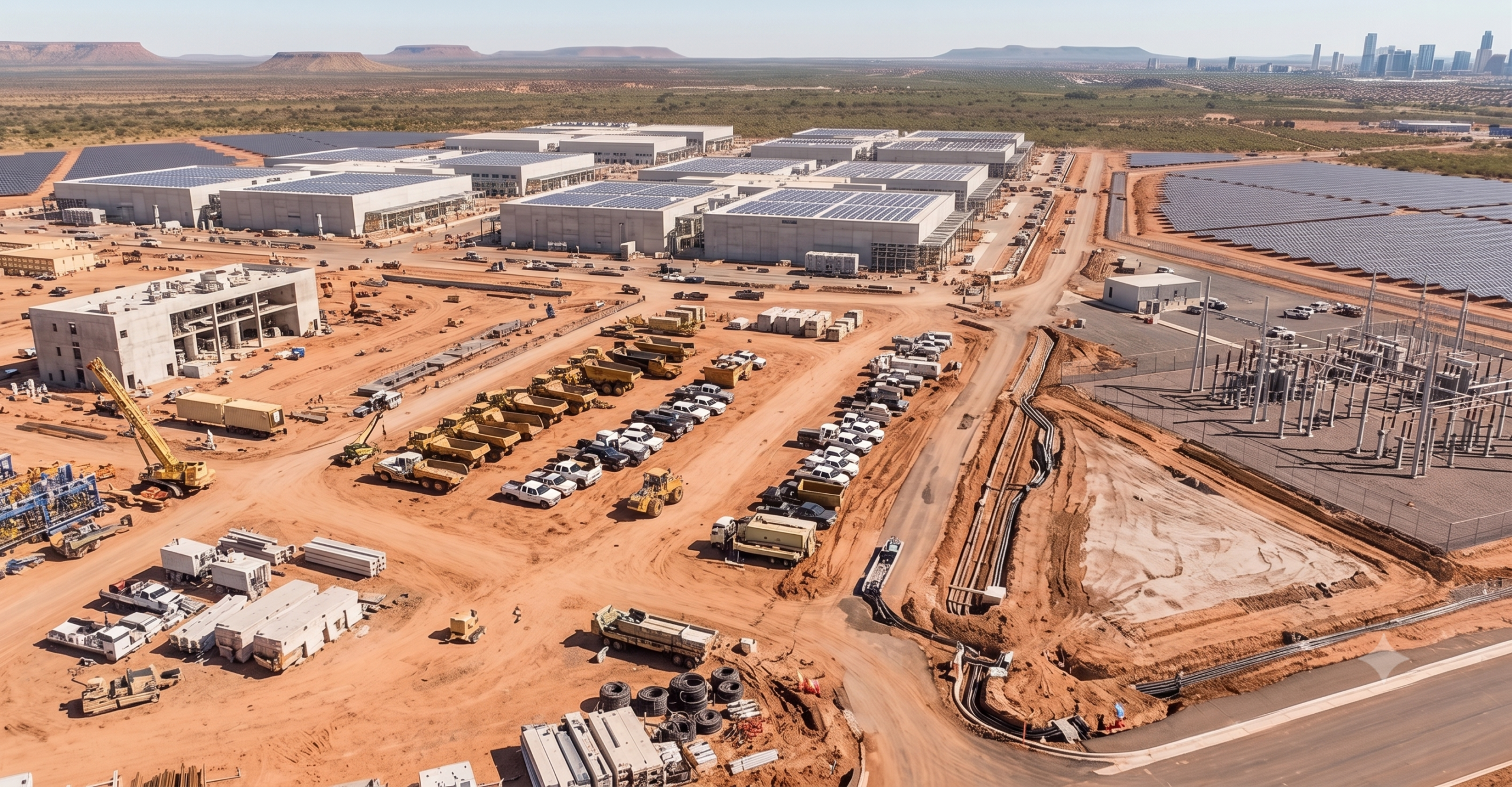
Before there’s a building, there’s often nothing: a leveled lot, no power, no network. A Cell on Wheels (COW) or similar deployable unit, paired with satellite backhaul and power (solar and batteries) where no wired connection exists yet, can provide initial coverage at the site before any permanent infrastructure is in place, giving early crews connectivity from day one.
Phase 1: Groundbreak
As the site grows, so does the network. More workers, more equipment, and more site changes mean coverage has to expand and adjust in step with the project, not lag behind it.
Phase 2: Mid-Construction
With trailers, temporary structures, and a growing on-site workforce, the network needs to densify: more capacity, more coverage, more connected users. This is where mesh capability is often used to extend coverage across a larger, more complex site footprint without new cabling.
Phase 3: Building Shell
This is the phase that catches most site connectivity off guard. Outdoor coverage may already be solid, but once a building shell goes up, steel and concrete block outside signal from reaching inside, and there’s no cabling yet to run Wi-Fi. This is exactly when MEP contractors and other trades move indoors and need connectivity the most, often forced to walk back outside just to take a Teams call, download a BIM or CAD file, view their remotely monitored equipment, or access control. GXC can extend outdoor coverage into the shell using mesh, so connectivity doesn’t stop at the building line.
Phase 4: Permanent Infrastructure
Once construction wraps and fiber is in place, the temporary network transitions into permanent infrastructure. That’s also the point where the connectivity investment made during construction can become a revenue opportunity, delivering in-building connectivity to tenants and end users from day one of occupancy.
Who This Applies To At Your Site
GXC’s construction and data center connectivity touches a wide range of roles across a project, each with a different stake in getting it right:
- Project Managers: need connectivity that keeps pace with the schedule at every phase of the build.
- General Contractors and Superintendents: manage day-to-day site operations and feel connectivity gaps in real time, from coordinating crews to walking outside to get a signal.
- Procurement: evaluate and budget for connectivity across the life of the project, including the transition to permanent infrastructure.
- Safety and Security: depend on reliable coverage for cameras, access control, and site-wide communication.
- Field IT and Connectivity Teams: own the network buildout and troubleshoot connectivity issues across a constantly changing site.
- Owners and Developers: care about the connectivity investment made during construction becoming a monetizable asset once the building is occupied.
- Data Center Operators and Colocation Providers: think about connectivity in terms of uptime SLAs and tenant requirements from the earliest phases.
- Subcontractors and Trades: especially MEP trades, are often the ones stuck without connectivity once the building shell goes up.
Owning Your Cellular Network At Your Site
What Makes GXC Different
GXC delivers connectivity that grows with the site instead of falling behind it: coverage that starts at groundbreak, densifies through mid-construction, extends inside the building shell before cabling exists, and transitions into permanent infrastructure once the building is occupied. For data centers, where remote locations and aggressive build timelines make connectivity gaps even more costly, GXC brings that same phased model to a sector where speed to power-on matters most.
A handful of capabilities set GXC apart from other private cellular providers serving construction and data center sites:
- Traffic separation: critical applications get priority over general traffic.
- Rapid deployment: go live at groundbreak instead of waiting for permanent infrastructure to catch up.
- One network across every phase: from open dirt to a finished, occupied building, without needing a separate network for each phase.
- Mesh where it’s needed: extend outdoor coverage inside a building shell before any cabling exists, closing the gap that catches most job sites off guard.
- A path to monetization: the same infrastructure built during construction can be turned into a connectivity offering for tenants and end users after occupancy.
- Built for jobsite conditions: hardware built to hold up against dust, temperature swings, wind, and vibration, the everyday conditions of an active job site.
- Scales across multiple sites: for GCs and developers running multiple active sites at once, connectivity can be managed consistently across a portfolio rather than one-off per project.

Patented Cellular Mesh Architecture

Network Mobility